21 March 2013

Obama = Bush Jr??? (hint: the answer is no)

Almost exactly 4 years after I wrote the last article I reposted, on Obama targeting off-shore tax-shelters, I over heard a couple people I'm close to agreeing that, while he gives good speeches, "Obama is really not that different from Bush in policy, and in some ways he's worse", which of course I've heard plenty of times before, generally from folk on the far liberal / leftist / socialist leaning side of politics (which, given where I live, is a lot of folk).

That's not really the sort of comment that will lead to a productive debate in real time, even if I did have a plethora of facts to drop off the top of my head, so I just held my tongue for the moment.

Here on my blog I have time to think through my response, and an easy way to cite references, so here goes...


08 March 2013

summer project

I did everything from drawing the blueprints to pouring the concrete footings. The door initially opened directly on to the staircase, which I simply removed, and then reattached after the deck was finished. Took about 2 weeks (half of which was shopping time, and waiting for the concrete to dry), and cost just under $2000 (not including materials)


.

13 February 2013

Workouts for the Brain


Just like with fitness / health / strength, a lot of intelligence is genetic, and there is nothing you can do about that part. But, like with fitness, even more of it is environment/experiences, and we have 100% control of that.
All of these things will literally stimulate the creation of new neural connections, and (to a smaller extent) even brand new brain cells.  This has been definitively confirmed by plenty of independent tests (which is where the idea of "brain games" came from - although that is as yet unproven to be effective)
Plus, when you start to understand the underlying reasons for how things work, everything starts to make sense.  Once you learn the fundamentals of physics, mechanics, and chemistry, all mechanical things make sense, and you can reverse engineer anything, figure out how it works, and repair it.  Once you learn the fundamentals of human psychology and sociology, all human behavior makes sense, and you can avoid conflict and get people on your side, or at least their respect, no matter how different their life outlook may be.

29 January 2013

What to Read?

I have been writing since 2006, and if my blogs were a MS Word document (as they are, as a backup), they would take up about 350 pages.
And a whole lot of that is just little random tidbits from my life that I found interesting the day I was writing.
Mixed in among those there are a number of in-depth essays on a wide variety of topics.  There has been no way to easily sift through all the random crap to find the good stuff.

Until now!
Wondering what to read next?
Of 200+ posts, these are (in my personal opinion) the top ~50 most interesting or useful

22 January 2013

What does our gut reaction to the word "rape" say about our subconscious beliefs about women's agency?


[NOTE: This article is longer than the typical blog post.  As an MS Word document it comes to about 30 pages.  Much shorter than a book, but longer than a magazine article.  Its probably better to think of it as an internet based paper, and not expect to read the entire thing straight through in one sitting.  I have broke it into 5 parts to facilitate that.
Also, if it isn't obvious enough from the title, its a very sensitive subject.  I am definitely not trying to offend or upset, but I am deliberately trying to be real, which means not being "politically correct" or sensitive for the sake of sensitivity.]


A friend of mine sent me a link to an internet blog article recently:

http://goodmenproject.com/ethics-values/nice-guys-commit-rape-too/

I read it, it was interesting and insightful and honest and unfortunately rare in its open-mindedness and candor.  I didn’t know when I read it,  but apparently it was read by a great many people, many of whom did not share that opinion of it. 
It was reasonably infamous among feminist bloggers, and induced quite a number of responses - none of which I’ve read. 
I did, however, take several days to go back and read the comment thread in its entirety.  The comment thread was surprisingly thoughtful for an internet discussion on a topic that causes intense negative gut reactions and has generated plenty of controversy, one which people are passionate and angry about. 
So much of the discussion was so good already that I had nothing to add.  
The first three pages are almost entirely filled with reasonable, open-minded people having a back and forth conversation on really difficult topics.  From all appearances these are regulars to the site, readers and contributors.  On page three the sort of knee-jerk responses that you would expect for the topic finally begin appearing, and it appears as though few of the new commenters took the time to read the existing comments before adding their own.  Not to say that intelligent conversation does not continue, it does all the way to the end, only that the ‘TL;DR – still have an opinion’ comments start becoming more common, - no doubt as the article began to be read and popularized more and more.
If you are interested in the topic, and have a few hours to kill, I recommend reading all of the comments from the beginning.

Though much of what I would have said was addressed, some very important things weren’t, and that’s what inspired this essay that you are reading right now.

21 January 2013

The Oldest Profession


First of all, let’s make one thing clear.  A prostitute does not sell their body.  The only circumstance in which any person actually sells a body part is when someone sells a kidney.  When you sell something, the buyer takes permanent possession of it, and the seller can not get it back.  The new owner can do anything they want with their purchase, because it is now their property.  This does not describe the prostitute / client transaction at all.  Even when people accepted indentured servitude arrangements they were only offering themselves on a long-term lease, not actually selling themselves.  A prostitute normally only allows her (or his) clients limited use of a portion of their body for a short, usually designated time period, an hour perhaps, maybe a few. 
This is not just semantics.  It’s a very important distinction.   

Really, what the transaction consists of is a person agreeing to engage in a specific activity for a specified time period which they otherwise might not do, to the benefit of another person who offers compensation for the time and labor involved.
Which, if you think about it, kind of describes every job.

Why is sex a special case? 

17 December 2012

The Last Big Question (the evolution of consciousness itself)

In The Beginning, There Were Amino Acids.


Amino acids are rather complex, and anything complex is fairly unlikely. Then again, solar systems and galaxies, water and rock cycles, and particle physics are all magnificently complex too, and they all happen to exist. Even just within inorganic chemistry, plenty of naturally, randomly occurring compounds are more complex than amino acids.

Its very uncommon, but it has been found that, under just the right circumstances, amino acids can form spontaneously. Just the right mix of carbon and nitrogen, some oxygen and hydrogen, maybe just a touch of sulfur, make it all aqueous (dissolve it in water, so they can all move around) and maybe zap it with a bit of that proverbial lightning for good measure - at this point it is still nothing more than an ordinary chemical reaction - and you got yourself one of the fundamental building blocks of life.

(Alanine; Black = Carbon, White = Hydrogen, Blue = Nitrogen, Red = Oxygen)


We know the end of the story, but considered alone there is nothing especially special about some random amino acids floating around in puddles. Just about everything is made of compounds (two or more elements mixed together), not-particularly-sexy things like rocks and dust and air and water. Some have more different elements mixed together than others.

Granite is made of several compounds, (quartz, mica, and feldspar), themselves made up of combinations of oxygen, silicon, aluminum, iron, magnesium, potassium, calcium, sodium along with trace amounts of other elements. It makes up the vast majority of the surface of the Earth, (there is somewhere on the order of 20 billion times more of it than there is of all living things on the planet - plants animals, bacteria, everything combined)

In comparison with granite's 8+ elements, amino acid's 4 seems almost simple, and compared to its abundance, amino acids are downright insignificant.

16 December 2012

Comments from the MMM Forums Part 5: OWS / 99%

The 5th of the 5 part series of blog posts taken from the Mr Money Mustache discussion boards, on the politics, economics, ethics and philosophy, of building wealth through frugality.
-------------------------------------------------------------------------------------------------------------

By COguy:

Your thoughts on the we are the 99% blog?
« on: November 13, 2012, 01:51:08 PM »
At the risk of seeming insensitive, I wanted to see what all of you folks thought of this.  Is it just complaining? 

http://wearethe99percent.tumblr.com/

It seems to me that if one followed mustachian principles they should get out of sticky financial situations much easier.  Ride a bike, in source everything, etc...Yet, I know I was lucky to be born to good parents and some of these people were not and I feel that that stacks the deck against them. 

Obviously, the medical expenses make sense as being very hard to overcome, but what about the rest?
…

[lots of posts, mostly agreeing that it is in fact mostly whiny pants complainers who dug their own hole and now want bailouts]

…

15 December 2012

Comments from the MMM Forums Part 4: Invesment Income Taxes


Part 4 (part 1 was here)...This thread was not intended to be political at all.  But of course someone had to turn it that way.
Someone, meaning me…


…

By Guitarguy:
Did anyone's eyes pop out of their head when...
Romney said he'd completely get rid of all capital gains taxes for people earning less than $200,000 a year off of dividends ect... in the debate tonight? Is that really possible? And how does that affect a mustachian's situation of retirement?

…

By Bakari:

Re: Did anyone's eyes pop out of their head when...
« Reply #9 on: October 17, 2012, 05:49:14 PM »
Does anyone else see something morally wrong with taxing earned income at a higher rate than unearned income?

Set aside the personal benefit we are all looking forward to, once we can afford to live off passive income.

From a strictly objective viewpoint:
person A spends 40 hours or more (plus commute time) a week going to a job and working hard.  On top of the direct value their labor provides to society as a whole, they also contribute a percentage of the income they earn towards the general good in the form of taxes.

meanwhile, person B simply sits around at home (or travels, or has a hobby, or whatever, doesn't matter) and has positive income flow for no other reason than they had money to begin with.  Maybe they worked hard in the past and saved up, or maybe they inherited it, or maybe they laundered it after a crime, doesn't matter, point is they are not working hard now, and for that they are rewarded with not having to contribute to society.

14 December 2012

Comments from MMM Forums Part 3: Lets Talk Charities


Part 3 of the ongoing series of posts taken from the MMM discussion board

----------------------------------------------------------------------------------------------------------------

By I.P. Daley :
Let's talk charities - (Afghani brick kilns and us)
Was reading the evening news tonight, and came across the following article in the world news feed:

Afghan family works to pay off crushing debt

Nutshell on the article? Guy gets married, wife gets sick, guy borrows $900 from his employer to get medical attention for his wife. Nine years later, he's still in debt and he and four of his six children (youngest working is 4 years old) are working in the kilns along with him to try and just eat and pay off the debt. And they aren't the only ones:

http://www.un.org/apps/news/story.asp?NewsID=41177
http://www.essex.ac.uk/armedcon/story_id/000786.html
http://www.afghanistan-today.org/article/?id=215

This isn't some new story in the history of man... it's happened before, it's happening right now, and it'll keep happening. This sort of thing even occurs in today's United States, just look at the immigrant tomato field workers in Florida as an example right off the top of my head.

A lot of us give a lot of lip service to frugal living, staying out of debt, being socially responsible, and extol the virtues of the bounty of goods that allow us to pursue financial independence. We also frequently want to punch people in this country in the face for their decadent living beyond their means and wasteful consumerism, and honestly, this article just re-stirs some of that anger because some of these never-to-be-forgiven family life debt balances on loans taken out for basic necessities in the third world are for less money than many people waste on frivolous crap in a month here. A lot of times, we also forget where a lot of these goods that give us the quality of life we have come from and who made them as well as how little (by our standards) it can take to dramatically change their lives.

13 December 2012

Comments from MMM forum part 2: Pursuing a Responcible Early Retirement


A continuation of the last post, this is taken from another thread on the MMM forums.
Again, for the sake of brevity, I have included just what I’ve written, along with quotes of what I am responding to, after the initial post, but if you are curios, feel free to click the link in the first post for everybody’s discussion.


------------------------------------------------------------------------------------------------------------------

By: darkelenchus

Pursuing and Maintaining A Responsible Early Retirement
« on: August 01, 2012, 12:07:04 PM »
Purpose & Rationale For This Thread

Since nobody seems to have any real objections to the central argument in sol's thread on how your early retirement might be evil, and since the thread has morphed into a discussion about somewhat tangentially related matters (e.g. justifying charity, differing moral systems, the purpose/value of taxation, sustainable population levels, et alia), I figured it'd probably be be best to start a new thread to begin discussing practical ways of reducing or eliminating the evil in pursuing & maintaining early retirement.

Summarizing the Problem

Okay, so let's identify the areas (in italics) where evil can creep in to MMM/ERE-style early retirement:

MMM/ERE Early Retirement =df A lifestyle attained and maintained through frugal practices and investment strategies, whereby one keeps a high savings rate during one's working years, eventually reaching the point where return on investment from savings covers all living expenses at the very least, which enables one to forego working a conventional job and thereby free more of one's time in comparison to more conventional working careers.

The thesis is that in pursuing early retirement, each of the three italicized areas above could perpetuate an unjust inequality: viz., the manner in which one executes one's early retirement could support (or at least be dependent upon) a system that denies that same opportunity to others.
  • Frugal Practices: If one seeks to maximize one's savings rate by purchasing the lowest priced goods at the best value, one might be supporting businesses that utilize exploitative business practices.
  • Investment Strategies: Investing in stocks provides capital to companies that seek to maximize return on shareholder investment. Just as with keeping prices low for the consumer, many companies employ exploitative business practices to maximize that return. Investing in bonds provides capital to many of those same companies.
  • Allocating Free Time/Resources: If we will early retirement as a value, it would be contradictory for us to maintain that other's shouldn't have that same opportunity. Merely refraining from perpetuating the system is not enough. We should do what we reasonably can to provide people that opportunity.

If we're concerned with reducing or eliminating this unjust inequality, then we'll have to a) choose frugal practices and investment strategies that at the very least don't exasperate the unjust inequality, and b) actively do what we can to help alleviate it. Below are some of the ideas I've come up with for going about doing this.

12 December 2012

comments from MMM economics / philosophy / politics threads

comments from MMM economics / philosophy / politics threads

I am a regular reader and contributor to the Mr Money Mustache discussion board forums.

Its mostly talk and advice regarding money management, DIY projects, bicycling as transportation, energy use, investment strategy, and various other ways to have more wealth by living more efficiently.
Every once in a while, though, a philosophical / political / social topic comes up, and the discussions especially interesting.

Here I have consolidated a number of my input and responses to some of the more intense conversations that have come up in recent months (with quotes of what I am responding to, for context); things which I feel are important and interesting, which respond to very common ideas, but which I never had quite the right formatting to turn it into its own blog entry.
Sometimes you need a good antagonist - preferably someone intelligent and knowledgeable (but wrong) - to play off of, to respond to, in order to make a point coherently.
The indented, highlighted text are quotes that are being responded to.  The further indented, different color highlighted parts are quotes within quotes.

The first 3 were all closely related, and, randomly enough, was spawned originally by a thread on how much the average American spends at Starbucks:


24 October 2012

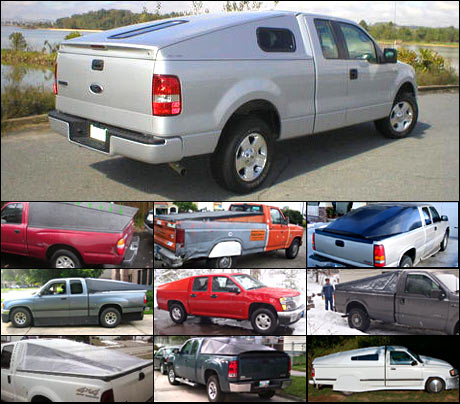
Aerocaps for pick-up trucks

Aerocaps for pick-up trucks

by Bakari Kafele on October 24, 2012
Aerolid When people think about fuel economy, they usually think about small cars, perhaps a mid-size hybrid.  If they think about trucks, its usually to contrast them with a more efficient vehicle (and perhaps chastise truck owners for their wasteful choice).
But while cars are great if you need to get yourself and maybe a few other people from one place to another, they don’t excel in moving large amounts of stuff, and can’t tow very much.
If you regularly need to move lots of big, bulky, or heavy stuff, or tow something large and heavy, but rarely need to move more than a couple people, a truck makes a lot of sense.
Of course there is a reason that trucks are seen as inefficient: they are.  They are heavy, overpowered (although cars are even more so these days), and not at all aerodynamic.
Then again, because trucks get such low mileage to begin with, improvements in their mileage have a relatively bigger impact.  For example, an increase of 15mpg for a 45mpg car is a 33% increase and will save 55 gallons of fuel over 10,000 miles.  Not bad, but that same 15mpg improvement to a 15mpg truck is a 100% increase, saving 333 gallons over the same distance.
So what is a mpg-conscious person who needs to move a lot of stuff to do?

06 September 2012

Advertisements that only work due to ignorance and stupidity

I don't generally see a lot of ads, thanks to AdBlock on the computer and a RePlayTV unit that automatically skips them when I watch an occasional show, but between Hulu, the few that get past the RePlay's filters, and billboards, I can't seem to escape them entirely.
Which is fine, they are paying for me to have free content, some of them are entertaining, and every once in a great while actually informative.

But there are 3 out right now which grate against me so severely that the only way I'm going to be able to stop ranting in my own head about them is to rant on the internet.

They are deliberately relying on consumer's ignorance in order to try to convey a message which simply isn't there - the facts are technically accurate, but the implication is actually the exact opposite of reality.


1) The new milk campaign, attempting to discredit soy milk:


They list a bunch of scary sounding "chemicals" that soy milk contains, to contrast with cow milk, which according to the ingredient list has only one ingredient: "milk".
Never mind that the list of scary sounding chemicals they list consists almost entirely of vitamins and minerals which are actually quite healthy, or neutral at worst.

So, in the interest of fairness, here are some scary sounding chemicals that are present in cow's milk:

13 July 2012

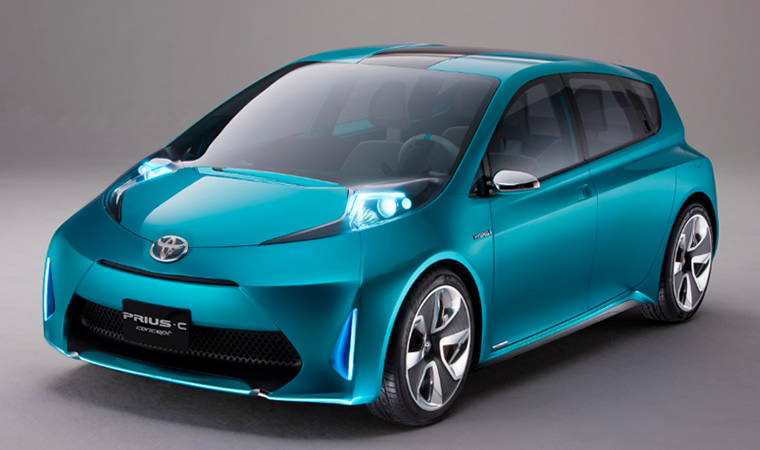
Prius C: A sub-compact hybrid, at a non-hybrid price.

Prius C: A sub-compact hybrid, at a non-hybrid price.

by Bakari Kafele on July 13, 2012

The newest Prius, available for only 2 months now in the US, is a compact fuel-efficient hybrid.
One thing it is not, however, is a Prius.

09 July 2012

Adding an overdrive (BW T-19 to ZF-5 transmission swap)

(Just want tips for swapping a BW T-19 for a ZF S5? Skip to tips.  Not swapping a Ford truck transmission?  Skip to the end for the results.  Continue reading for all the gruesome details of my project.  Hopefully my trails and tribulations can at least provide you some entertainment.)


If you’ve never driven a vehicle more than a couple decades old, you probably take overdrive for granted.  You may not even have a clear idea what that term means.That 5th or 6thgear, with a ratio smaller than 1.0 (meaning the driveshaft is turning faster than the engine) lowers the engine RPM speed on the highway, and can make a huge difference in the fuel used to go the same distance at the same speed.Gears on a car are just like gears on a bicycle; imagine trying to ride a bike with only a small chainring and big cog, and having to spin your legs like crazy to get anywhere at a decent speed.  Lower RPMs means less internal friction, less internal reciprocal motion, and therefore less wasted energy.
If, like me, you don’t care to spend the money for a new – or even remotely new-ish – vehicle, you may have noticed that overdrive was once upon a time not always standard equipment, or even available as an option.

The Ford F-Series of trucks has been one of the most popular vehicles world-wide for decades, and though much has changed over the years, many of the internal design factors stayed the same from one generation to the next.  They were rather reliable, so a good many older ones are still on the road.  Those two factors mean that there is much interchangeability of parts among different generations, and those parts are easy to find.
The 7th generation F-series (1980-1986) had a couple of manual transmission options, all of them 4 speed. My own 1983 diesel F-250 ¾ ton truck came with a Borg-Warner T-19, in which the 1st gear was an extra-extra low granny gear (6.32) which is normally not used.  For all practical purposes it is a 3-speed.  No overdrive gear.  In fact, even 4th gear isn’t quite direct drive, at a 1.1 drive ratio.
This means shifting into top gear at 25mph, and 2400 RPMs at 55mph.
2400RPMs means each piston is going up and down 40 times every single second, which means the mass of the piston head has to stop, change direction, move a little, stop, change direction again, 80 times every second (once up, once down, for a full rotation).  This is bad enough is a small engine with light parts and a couple cylinders (like a motorcycle) but in a heavy V8 diesel engine, a lot of inertia is going to waste.
Not a terribly big deal in 1983, when the national speed limit was still 55, but post-embargo gas prices had dropped again; the lack of stock overdrive leaves a lot of potential for increasing highway fuel mileage.
The addition of an overdrive gear reduces engine speed from 40 cycles per second down to only 28, a 30% reduction.

17 June 2012

Please ride your bike in the street.


My used bike buying guide has been way more popular than anything I have ever written.

Since it is geared towards new riders, I feel obligated to share some statistics I just learned - confirming what I have known for many years - about the best ways to stay safe in traffic.

                    ---------------------------------------------------------------------------

Riding among fast moving two-ton steel machines can be very nerve wracking when you first start out.

The number one fear of most new cyclists in traffic is getting hit from behind by a driver, but it is important to know that this is, statistically, actually the rarest type of accident. 

The most common are at intersections and driveways, when the driver didn't see the cyclist - usually because they weren't expecting the bike to be where it was.  That's why I (and the official League bike safety classes) recommend riding with the normal flow of traffic.

Riding with the normal flow of traffic means riding in the street, to the right (in America at least), and obeying basic traffic laws, such as stopping for red lights and going the correct way on one-way streets.  It means never riding against traffic (facing on-coming cars) and never riding on the sidewalk.

Although it feels much safer to be on the sidewalk, away from the cars, in reality most accidents happen at driveways and intersections, and a driver is less likely to see you if you are anywhere other than the street.

You reduce your statistical chance of being hit by a car by somewhere roughly on the order of 90% compared to the average rider just by riding predictably, following the law, and being extra visible, because, as it turns out, the vast majority of bike accidents are (at least partially) the cyclists' fault.

So what exactly does riding safely entail?

13 June 2012

“A poor person never gave me a job”


The latest meme created by the political Right in order to attempt to justify massive wealth inequality in America, a talking point for the middle class to use, but even more so a subtle reminder to them that they should be grateful towards their social superiors.

It is effective in its simplicity, as good memes and talking points should be. 
It takes so much for granted that it appears to be impossible to counter – it is in fact an accurate statement – so there is no equally simple one-liner that can refute it.  Each and everyone of the underlying concepts that it relies on are false, and so to show the irrelevance of the statement to the issue at hand requires actually delving into and dissecting the assumptions it makes.
That is generally not practical in casual conversation, nor on a heavily time restricted televised debate.

But I have as much space as I want here, so, since I have yet to see a thorough analysis of this –frankly – ridiculous statement, I will do so myself, right now:

14 May 2012

Infinity Miles Per Gallon

Infinity Miles Per Gallon

by Bakari Kafele on May 14, 2012


Question:
What can you do to absolutely minimize your fuel use?


02 May 2012

Jacob Aziza / Bakari Kafele; Ecomodder / Hypermiler

Jacob Aziza / Bakari Kafele; Ecomodder / Hypermiler

by Bakari Kafele on May 2, 2012
Good morning fellow ecomodders, hypermilers, and efficiency enthusiasts of all kinds.
The EcoModder blog has been inactive for over a year (save Tim’s two most recent updates), and I have been asked to help pick it up again.
So, since I also have not been active on this site for nearly a year, to start I thought I would re-introduce my self:
My name is Bakari Kafele.  My internet screen name (or at least one of them) is Jacob Aziza.
You may remember me from such internet sites as the EcoModder Forum and Instructables.com
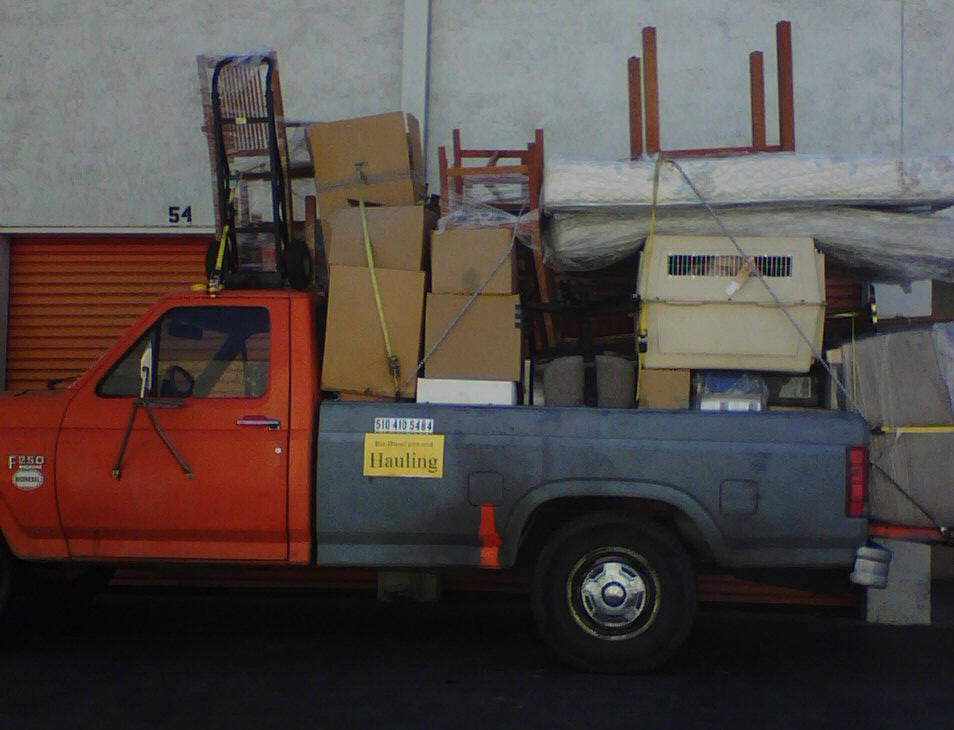
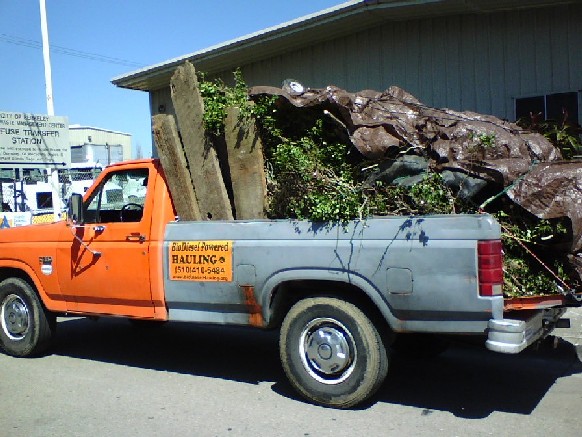
I have an old (1983) full-size truck with a 6.9L diesel V8 that I use for deliveries and hauling and occasionally towing.  It would be a monstrosity for a commuter vehicle, but it’s about the smallest thing that could serve my work needs – most people hauling large or heavy loads (see below) would use a box truck, a flat bed, or maybe even a dump truck.


At the very least an F-350 or equivalent1-ton pick-up.
So, depending on how you look at it, getting 15 miles per gallon, (as I was five years ago), could be considered decent, given the type of work being asked of this old truck – 15 mpg being what I measured I was getting, which coincided more or less with what most people report getting in the same make model and year truck.
Then, in 2008, I read an article about Wayne Gerdes…

18 March 2012

"Mad Max" hypermiler questions and comments answered


As I am very sure that anyone who has found this blog is already aware, me and my work truck were recently featured on  TreeHugger, Huffington Post, HighT3CH, and Faircompanies.com, among others, for my new video (shot, edited, and posted to Youtube by Faircompanies' Kirsten Dirksen)

It is 14 minutes long, which is long by modern internet video standards, but still was only enough time to provide a little snapshot into the entire concept.
I've been crawling the web for the various re-posts and the comments on them.  Not surprisingly, given how unorthodox everything I'm doing is and how unfamiliar the general public is with the idea of hypermiling, there are a lot of questions and criticisms and misconceptions.
First, I'm not in or from LA.  I live in the San Francisco Bay Area.

Also, the grill block is not made of concrete!! :P
That error is just bizarre.  I wrote to treehugger's editor about it, but I haven't heard back yet...
[update: he wrote back, and fixed it]


Some of the more common questions and comments I have noticed follow:

15 March 2012

My Green Living Projects

Remember the scene in The Jerk where Navin (Steve Martin) gets really excited because the new phonebooks has arrived?
Well, the new phonebooks are here.

The mini-documentary on my life that was filmed by Faircompanies.com several years ago now has a sequel.
In this one I talk about my truck mods and driving style that lets me get almost double the mileage my truck initially got, saving me a couple grand in fuel charges each year.

My last video with them is up to almost a quarter million views, but the company has gotten a lot more subscribers since then, so there is potential for this one to be even more popular.

If you have already seen it, this post answers the most common questions, comments, and criticisms I have gotten so far:
http://biodieselhauling.blogspot.com/2012/03/mad-max-hypermiler-questions-and.html


22 January 2012

Welcome

Blog.
What a funny word.


Hi, I'm Bakari Kafele.

You may remember me from such blogs as:
http://apps.biodieselhauling.org/blog/
http://neapolitanblog.blogspot.com/
and
http://www.myspace.com/pyrococcus_furiosus/blog

If so, you may have noticed that I have content scattered all over the place, none of which is well organized or easy to find or read.
Well that is all about to change.

For anyone who doesn't know who I am:
I'm Bakari Kafele.  I already said that.
I often use the name Jacob Aziza when I am writing on the internet.  I also sometimes use the name David Craig Hiser.  And Lenard E. Simpleton (or sometimes just Lenard Simp)
We are all the same person, (like Tyler and his best friend, except that I have always been aware of it.)

I'm just a random ordinary guy.
I live in an RV which is partially solar powered, both for the environmental benefit and the major cost savings.
Living with me are girlfriend Jessica and non-human roommate Fushi, who also goes by the name Chairman Meow.

I run a small independantly-certified-green moving, hauling and handyman business BioDiesel Hauling, using my biodiesel powered truck.  I've been doing this for over 5 years, beginning immediately  after I finished 4 (simultaneous) associate degrees.
Before that I held over 30 jobs in my lifetime, including biology lab tech, bicycle messenger, private security officer, armored truck driver, carnie, factory worker, fundraiser, liquor store cashier, bicycle mechanic and gigs as a TV commercial actor, ditch digger, medical test subject, "adult" actor, and election polling place supervisor.

Currently, in addition to BioDiesel Hauling, I am in the Coast Guard Reserve, and I still take occasional shifts with the BikeStation where I used to work.

I am vegetarian, I drive a motorcycle with a very small engine, and I am very opinionated on just about everything.  I also go through phases where I really enjoy writing, although I have been out of that phase for over a year now.

My old blogs have several years of content, some of which (at least in my own narcissistic opinion) is pretty good, so to begin with, I will be reposting old content which most likely no one has ever read (MySpace anyone?) to here where it will be more accessible.

I realize I will probably never get a huge following, since I have no real theme and no motivation to seek publicity, but if you happen to want to subscribe, I've made it easy with the top boxes in the right side bar.

Enjoy.

17 January 2012

Buying a good used bike from Craigslist.

For my first post on this new blogger account, I'm going to write a guide to how to select a decent used bicycle.

My VERY first post.
Even before I introduce this new blog website of mine, which is taking the place of my old MySpace blog (remember MySpace?) and the free blog that came with my businesses web domain hosting (with its character limit).  My second post here will introduce it a little more thoroughly than these three sentences, and after that I will start moving old existing content here.
But first I will take a break from my usual political ranting, personal stories, and posting of links I found fascinating, to fulfill a promise I made to a fellow reader of a different blog (one with actual readership, MMM) in the comment section to share some of my knowledge of bikes and of Craigslist for an audience that may not know a good bike from a bad one.  Imagine that, something useful!

First, for anyone who came here via link or Google, and doesn't know me personally, my credentials on the subject:
I began riding regularly for fun and transportation in 1992, when I was 12.  The next year I began riding to school every day, so that I could keep the bus money for other things.  In high school, in addition to daily commuting (to school and internship) and weekend rides of 40-100 miles, I began annual 4 day trips down the CA coast with a group of teachers and friends.  After college I went with the couple that had organized those annual rides from San Francisco to Puerto Vallarta Mexico, and went solo from there along the coast to Acapulco and then North to Mexico city (over an 8000ft pass) for a total of 2800 miles over 2 months.  When I returned, I took a job as a bicycle messenger.  I eventually ended up also working as a messenger in New York City.

In 20 years of serious riding, I have had a bmx bike, a steel touring bike, a British internal-hub drop-frame from the late 60s, a carbon fiber racing bike, an aluminum mountain bike, and two folding bikes, all of which together I paid a grand total of $450 for (of which $400 was the carbon fiber road bike).

Eventually I returned to CA where, for the past 6 years, my primary job has been as a hauler (mover, and handyman) which involves picking stuff up that people don't want anymore, and then finding new owners for those things. This involves either selling or giving away anything which is still useable (which is most of what I pick up), frequently on Craigslist.
My second job for the past 5 years has been as a mechanic in a tiny bike-shop of sorts, the Bike Station, whose primary service is FREE secure valet attended bicycle parking, but also offers relatively low-cost repairs.  Because we don't sell new bikes, and because we never turn anyone away for lack of bike quality, I have been able to work on a great variety of bikes, of all types and ages and cost levels, which is rare in any one shop.
(My third job is a reserve for the Coast Guard, but that isn't relevant to this at all)

And now... on to the content!


1)  This is the most important thing of all:

25 October 2011

Dramatically reduce unemployment - with no cost to government - by instituting a 35 hour work week

Tuesday, October 25, 2011 (UPDATED 15 SEPT 2013!; new petition currently active)


Dramatically reduce unemployment - with no cost to government - by instituting a 35 hour work week


Please sign my federal petition:
http://petitions.moveon.org/sign/a-35-hour-work-week-will

Whatever the response is, it will at least bring this issue to the attention of American politics which is the first step toward action.
It may never happen, but it will get people thinking about things they take for granted; like the purpose of the economy, production, employment, unemployment, distribution of wealth, etc
.

It has become common practice when talking about the economy or the market to treat them as though they were an end in and of themselves, and inherent good regardless of their effects. We seem to have completely forgotten that the whole point of having an economy in the first place is to serve and better the lives of actual people. Over the past half century improvements to the economy have not translated to improvements in the lives of the majority of Americans. We all need to stop, step back a moment, and ask the question: in that case, what is the point?
When individual citizens are asked to make sacrifices for the sake of "the economy", that means citizens are here to serve the markets, instead of the markets being here to serve the citizens.


The petition website has a character limit; here the original text I wrote for it:


07 January 2011

Be Healthy, part 2 (sub-section: fat management)


Friday, January 7, 2011

Be Healthy, part 2 (sub-section: fat management)


As I mentioned in the main "Be Healthy", I found when writing it that this subsection of overall health was just too large to fit comfortably in with the rest (no pun intended). While not one of the basic fundamental pillars of health any more than any other specific ailment, given that the majority of individuals in our culture have unhealthy body fat percentages, maybe it is actually worthy of its own essay. Just keep in mind that everything to follow is meant to be considered from within the context of the main "Be Healthy" essay.
(Since blogs are listed with the most recent entry on top, the main essay is immediately below this one. If you have not already, read that one first)
Having below a certain percent body fat does not automatically make you healthy...


02 January 2011

Be Healthy, My Friend


Sunday, January 2, 2011

Be Healthy, My Friend 


The word "Health" has become almost meaningless.

This is due to a number of factors, but one of the chief ones, I suspect, is marketing.
It helps to sell things as "healthy" if there is no clear idea what that actually means.
I will resist the temptation to get into that whole topic...

What I do want to do is try to remove some of the abstraction, by breaking it down into its constituent parts. While the term itself eludes a single precise definition, there's a list of components that are part of it, and those parts are reasonably concrete.
-A lack of, resistance to, and/or ability to recover from infection (by viruses, bacteria, protozoa, fungus, or parasite)
Even a healthy person may get the occasional cold, but they will get better more quickly
-A lack of, resistance to, and/or ability to recover from non-infectious-disease (such as diabetes or angina)
-A lack of, resistance to, and/or ability to recover from injury
-Longevity (how long you live)
-General fitness*
-Mental/emotional health - I wholeheartedly acknowledge that this is a very important part of overall health; however there is so much to cover just considering physical health that I won't mention mental/emotional here any further than this sentence.

24 November 2010

Minor celebrity

Minor celebrity


I guess I'm not all that surprised.

A video I did for an environmental blog (faircompanies.com) was posted on youtube.

http://www.youtube.com/watch?v=EJc8973GURk
It is almost up to a quarter million views!
I have been getting people all over the country tracking me down on Facebook and asking to be friends and asking questions after the see it.
Since there are probably plenty of people with the same questions who don't go to the trouble to track me down, I'm reposting my answers to some of those questions here:

28 April 2010

Awareness of white privilege VS actually working to change it


  • Apr 28, 2010

Awareness of white privilege VS actually working to change it

A couple friends of mine are taking a class on being a "white ally" - race awareness and relations, power and privileged, and counteracting racism.

One of them mentioned to me some critical feedback she had offered and it got me to thinking in more detail what has always bothered me about those sort of discussions, but up until now never quite pinned down.

The following is not a commentary on that class in particular, as I know essentially nothing about it, but rather a critique of a few general ideas I have heard and read on the topic in the past:


1 There is no such thing as "people of color"
-The impact of past racism (including slavery) and present racism does not effect all races equally, nor all in the same way.
- A black american and a white american likely have more in common with each other than with a fresh-off-the-boat Vietnamese person. A white american whose family has been in the US for generations likely has more culture in common with a black american than with a first generation eastern european immigrant with whom they share skin color.
-The very term "people of color" encourages white people to think in terms of a false dichotomy of 'us' (all white people) and 'them' (everyone else). It not only homogenizes all other races, it also makes everyone not white into an "other".
-Lumping all non-white cultures into one category, while giving white an entire separate category in itself suggests a type of superiority.
-This dichotomy also discounts the existence of mixed race individuals (officially 2% of US society, but really much higher - most surveys, as well as society, force people to choose one identity, even if they are in fact mixed)

2 Historical racism is the single largest cause for modern black poverty, and poverty does generally correlate with crime. However no historical or sociological factors can excuse individual behavior. No matter what circumstances a person is born into, they have a choice about their own behavior. Apologizing for, ignoring, discounting, or explaining away black crime rates, drug rates, or general anti-social behavior (e.g. boombox on a crowded train) does nothing to increase equality, and does not bring less conscious white people about as allies.

3 Discrimination is explicitly illegal. Talking about "institutionalized" or "systemic" racism does not address the issues which are most relevant today. While there are still white supremacists in the US, their view has become as unacceptable in mainstream society as it once was only among civil-rights activists. The president of the US is 1/2 African. This does not mean that the conversation about race is over. However, it does mean it is time to change that conversation.

For example, talking about power hierarchies is mostly nonsensical today. If racism = racism + power (as is often claimed by race activists), this does not imply that only whites can be racist, because whites do not have any particular power over other races. There are minorities in the role of police officer, judge, congress person, boss, professor, etc. as well as whites in poverty, in jail, or otherwise powerless. If you ignore all individual circumstances and look only at the whole society, then no one can be racist, because society is no one person.

4 Rarely is it explicitly acknowledged how much - and in what way - individuals (primarily, but not exclusively, white) continue to benefit from past racism. This nation was taken by force from the American Indian, built largely by African slaves (as well as Asian indentured servants) and thanks largely to not only racism, but also inheritance and locally funded education, past disparities directly result in present disparities. Even if one's own ancestors never killed Indians or owned slaves, the mere fact of living in this country means you personally benefit from those who did.

5 Not all non-white people are poor. Not all white people are middle class or wealthy. Class and race are not interchangeable. To speak about them as if they were interchangeable represents a stereotype - it implies a universal truth based on a statistic. The implication itself is racist.
Replacing discussions of poverty, economics, and class with discussions of race is a tool those with power (white, yes, but a special subset of white people - wealthy conservatives) use to polarize the working class. They emphasize criminals and welfare recipients (read: blacks) or immigrants (read: hispanics) and leave unspoken as a given the unity between white Americans of different classes. This helps prevent what should be a natural alliance of the lower class against those who exploit them.


6 What keeps the racial status quo in our society is not a social issue, but rather an economic one.
What too few people talk about is the way in which the condition of one generation affects the next.
After slavery blacks were supposed to get land. This was not a hand-out, but merely a way to compensate, to allow them to begin to catch up. This never happened.
Since poverty is inherited just as surely as wealth, the only way to level the playing field short of paying reparations (with 145 years interest) today would be a strict inheritance tax on not only the wealthy, but the middle class. This would include not only cash, but things such as houses and family businesses.
The single largest factor in predicting an individuals success in life is their education. Pre-school is the best indicator of how well a child does in school. It will be impossible to ever have a equal society without universal, mandatory, publicly financed pre-school. Schools in America are funded 50% or more by local taxes. This system guarantees that schools in poor areas are underfunded and schools in wealthy areas have better resources and an easier time keeping good teachers. Locally funded public schools is an amazingly effective method of retaining the status quo, while appearing on the surface to be neutral and fair. To counteract generations of inherited poverty, ignorance, and a cultural mindset of being separate from society, America should be offering fully funded college for all low-income high-school graduates. And because poverty and ignorance are inherited no matter one's color, this should be extended to anyone who can't afford it.


Racism, in the sense of individual people with power holding stereotypes about a race and acting on that prejudice against individual members of said race, is a relatively small factor in modern America. Formally institutionalized racism is a thing of the past.
Were all of society, at all levels, to suddenly become "color blind", the trends set in motion hundreds of years ago would continue none-the-less. For this reason educating individuals about the existence of "white privilege" can not do much to change anything. If energy is going to be invested into change, it should be invested where it will do the most good.
Its one thing to be aware of culturally insensitive language. It is another all together to recognize that the economic system we take for granted perpetuates the impact of slavery, and that no matter how aware one is in their personal relationships, you directly benefit from the current system - and then work to change that system, even if it means undermining your own economic advantages.
This would mean advocating significant increases in middle class taxes, to fund more social programs. This would mean taking the time to counter the "tea-party" people, pointing out that true justice demands a redistribution of wealth. It would mean protesting to get colleges fees raised, in order to pay for scholarships. This would mean, instead of donating money / time / materials to your own children's school, donating that same time and money to the poorer district a few miles away.

Me personally, I have been called ni**er on more than one occasion. But (not counting by other black people who use it casually - that is whole different topic) it has been in each case by a meth addict (one disowned by her family, and the other evicted from a trailer park). These are people with no power, no influence. These are people so low on the social strata, all they have left to feel even mildly good about themselves is to find someone to hate, for any reason they can. As much as it roils the blood to hear it, they are harmless. The people and ideas that maintain the status quo - including associations of particular races with poverty, drug use, crime, etc - are not overtly racist; in fact, in most cases not even necessarily sub-consciously racist. Racism set up the status quo, but economics is what maintains it.

Capitalism, the free market, individualism, and the republic system of government (as opposed to true democracy) all play a part in maintaining the present as it was in the past. If we want a just society, those are the things that we need to look at first.

Science!


By Bakari Kafele | April 28th 2010 09:24 AM


Introduction:

(One simple rule)

Science is not guys in lab coats.  Science is not beakers and test tubes, or fancy expensive equipment that requires a degree to operate.
Science isn't something funded by corporations or the government or universities.

Science isn't even chemistry or physics or biology.  It’s (unfortunately) not something taught in school.

In its absolute simplest form, science can be boiled down to one straight-forward rule:

Check that you're right.

27 April 2010

Response to "Turning Hustlers into Entrepreneurs"


·         Apr 27, 2010

Response to "Turning Hustlers into Entrepreneurs"

"Turning-Hustlers-into-..Entrepreneurs" discusses the possibility of increasing micro-credit in order to support independent "black market" business people.  As someone who has been running a successful off-the-books business for several years, I believe the major obstacle is not a lack of credit, but rather a government which is geared toward big business.
As the examples in the article illustrate, people are already doing what they are doing, without capital.  What they lack is official legitimacy.  Many entrepreneurs, such as myself, would love to "go legit", but it is not a realistic option.
I understand and support the idea that government regulate business to protect consumers.  The problem is that government does not take the size of a business into account in the requirements it imposes on operating legally.

For example, a single guy with a pick-up truck doing local deliveries pays the exact same state license fee as a company with a fleet of semi trucks.  The  least insurance available to him is a million dollars of coverage with a 1-2 thousand dollar annual premium, even if he never comes close to transporting a million dollars worth of goods.   Every city he works in requires its own separate business license.  If he needs to hire a subcontractor on occasion, he needs to buy worker's comp insurance at a minimum, and possibly more.  Being self-employed, he pays an additional tax (which an employer would otherwise cover).  And of course by staying underground, he avoids paying any income tax on his business revenue.

All of this can easily add up to thousands of dollars.  That sum may be inconsequential to a corporation with annual sales in the millions of dollars, but to a small independent, going legit would cost me about 20% of my entire net revenue, more than two months income.

The solution to this is not to finance small business to help them pay for theses fees - these fees are annual, and taking loans only increases risk.  The solution is to have license fees proportional to net revenue, instead of being fixed amounts, requiring insurance companies to offer a full range of coverage options, including (potentially less profitable) low limit policies, and restructuring tax code so there isn't a penalty to being self-employed. Similarly, laws making it difficult or illegal to run certain types of business from home could be relaxed, (for example, allowing small scale retail in otherwise residential districts), eliminating the need for a dedicated store-front, a major on-going expense.

Reducing the government imposed costs of running an independent business legally would, without the additional risk incurred (for both the investor and the entrepreneur) by accepting loans or the costs incurred by providing grants.  It would also increase tax revenue, by encouraging existing underground businesses to come above the radar and join the mainstream economy.

26 April 2010

Global Warming Revisited


  • Apr 26, 2010

Global Warming Revisited

(The following was a "letter to the editor" I submitted to a progressive magazine in response to articles on global warming)


In "American Psychosis" you point to the many people who acknowledge global warming, but do not change much, if anything about their destructive lifestyles, and in "Hot Air" talk about the point of view of skeptics and deniers.

I run a certified green hauling business. I modified my delivery truck to get 30mpg (from 15mpg) and run it on 100% biodiesel made from recycled veggie oil.  I also work part time supporting people who bicycle to work  (at a business which runs at a loss because our main service is free).  I live in a 250square foot home and use less than $5 worth of electricity most months.
I also have some background in science, including degrees in earth science and biology, and generally track down sources for claims I read.

Having read arguments on both sides, I am not convinced that humans are significantly contributing to climate change.  While I admit I haven't kept up with the latest research, I have yet to see several points addressed:

23 April 2010

I have been appointed polling place inspector


  • Apr 23, 2010

I have been appointed polling place inspector

OMG
I am going to be the person in charge of my local polling place.
Democracy will literally be in my hands.
It will be my responsibility to ensure every vote in my neighborhood gets counted.

I am proud, and slightly terrified.

How it is I skipped over getting experience as a clerk first, I am not entirely sure, but I just got a very official looking notice in the mail, informing me that I'm gonna be the guy in charge this primary election, June 8th.

I start at 6am, work until 9pm, and I will have a crew of 5 people.
My designated polling place happens to be the same as where I normally go to vote, and its easy walking distance from my house.

13 March 2010

Flat Tax

  • Mar 13, 2010

Flat Tax

The science essay I told everyone I was working on has been written, and is in the final editing stages.  It will still be a while before it is ready for prime time though.
In the meantime, here is a short thing I wrote a while ago to someone (don't even remember who anymore) about the concept of a flat tax:
----------------------------------------------------------
The standard arguments for a flat tax make a couple of giant - and totally false - assumptions:
1)That the money which the rich spend and invest creates economic activity, growth, and jobs
2)That the rich have earned and therefore are entitled to their money.
3)That taxing the working class would generate more total tax money because there are so many more of them to tax
1)The investments of the rich do not generate economic activity. If they were not hoarding it, that same money would still be around. Business could get capital from government and bank loans, and from the stock market. That is, in fact, the whole point of the stock market, that capital is obtained from many small sources instead of one giant one.
Its as if one person hoards all the hammers in town, and rents them out to people, then wants credit for the houses other people built with them. If they weren't hoarding the hammers, the hammers would still exist. If they were distributed equitably, no one would need to rent them, therefore building would be cheaper, therefore more would get built. In this way the fact that someone is hoarding and charging interest actually depresses economic activity, because those hoarding the cash skim a little off the top of every financial transaction thereby increasing its cost.
2)The super rich do not earn, and therefore are in no way "entitled" to or "deserve" the money they have. Extremely few of the top 0.1% of wealth holders got there from some brilliant invention, and even fewer of the top 0.01%, 0.001%, and so on. Those at the very top get their wealth primarily from inheritance, and then build on it by collecting dividends and capital gains. They do not actually go to a job and do useful productive work.
Those who do make a salary are not necessarily earning their money either. CEOs make multimillion dollar salaries plus bonuses even when they run their companies into the ground, as we saw just recently, with even companies that needed to be bailed out with tax dollars giving their CEOs multimillion dollar bonuses.
3)The bottom 40% averages about 20k a year. Total annual income is 2.4 trillion.
The top 0.1% averages 7 million a year. Total annual income is 2.1 trillion.
300k rich people have nearly the same total income between them as 120million working class people.
The top 1% averages over 1million a year. Total annual income is 3.3 trillion, far more than the sum of every working class person in the country.
You could tax the working class at a rate of 69% of income and still not bring in as much tax money as you would by taxing the rich at a rate of 50%.
You can't squeeze blood from a turnip.
Furthermore, if you did that, the rich are left with, on average, half a million a year.
Half a million which, remember, they didn't really earn.
The poor are left with $6200.

In order to make a flat tax even approach "fair", you would have to make several other large changes to level the playing field.

First off, you have to eliminate ALL inheritance.  That means 100% inheritance tax on everyone, from ultra wealthy to middle class.  You earn your money in your lifetime, and then it gets recycled back into society.  There is no justification to say that a person is entitled to money they did nothing to earn. 

Second, you have to make education both free and mandatory from pre-school to at least bachelor's degree, if not more.

Third, you have to distinguish between income that comes from doing productive work (wages) from un-earned income such as dividends, interest, and capital gains.  Someone who merely skims off the top of other peoples work should be taxed at a higher rate then someone who actually earns their pay by working for a living and positively contributing to society.

When libertarians and the wealthy begin to fight to level the playing field, then and only then can they claim that a flat tax is about "fairness"

A flat tax is both impractical and immoral.

24 January 2010

A couple more Last Day of Youth Party videos


  • Jan 24, 2010

A couple more Last Day of Youth Party videos

Now people who couldn't make it can vicariously experience 4 separate components of the party.

Full Contact Spoons - the only existing recording of the greatest full contact sport in the world.  There is only 1 min and 17 sec worth because we are all old and fat and lazy.


Micheal Scott has it right


  • Jan 24, 2010

Micheal Scott has it right

On the popular TV show "The Office", the branch manager is a bit of a doofus.  He's not all that bright, he is totally obsessed with having his employees like him on a personal level, and he has very little knowledge of actual business or management theory.
He makes his superiors wring their hands and shake their heads - but the thing is, his office's sales record is the best in the company, so despite his many, many faux pax, he always keeps his job.

Nobody can quite figure out how he manages to do such a good job in spite of himself.

Even though he tells them quite clearly, time and again.

He considers his employees family.
He wants his customers to feel cared for.
He is more interested in making people happy than in making money.

You can't learn to be community based and to value clients as actual people in business school.  You can't use the idea of caring about people and being friendly to increase the bottom line, because if your interest is in the bottom line, you aren't genuinely interested in people.  You can't fake authenticity. 

12 January 2010

Best. Party. Ever.

Jan 12, 2010


Best. Party. Ever.


One of the things that happens when you get too old, you spend more time re-telling old stories than generating new ones.

I have a couple new ones now.

04 January 2010

Check Your Mirrors


  • Jan 4, 2010

Check Your Mirrors

Occasionally I end up driving other people's cars.

Invariably, I have to adjust the mirrors.
I often question why they were set the way they were, and the answer is usually some variant of "I like it that way".
I realized that probably a whole lot of people probably see it that way.

Setting mirrors is not a matter of personal preference.
There is an absolute right and wrong way to do it.

Before you accuse me of being a mirror nazi, consider that car accidents kill more Americans under 50 than disease and murder combined; 100 every single day.

As someone who rides a bike, skates, rides a motorcycle,  has driven large commercial trucks with large commercial size blindspots, and nearly been run over inside other peoples blindspots, I say again, with emphasis, setting the mirrors on your car is not a subjective exercise.
Doing it wrong can literally mean the difference between life and death.

14 December 2009

Christmas Lights


  • Dec 14, 2009

Christmas Lights

So many people, when the subject of Christmas lights come up, they acknowledge they are nice, but go on to add "but they are a waste of energy".

As someone who feels strongly that American's use of energy and resources is morally unacceptable, I would like to be very clear about this:
Christmas lights are NOT a waste of energy.

That 80% of car trips have only the driver or a driver and one passenger, yet seat from 5-7 people is a waste of energy.  That we live, on average, 20 miles from our jobs is a waste of energy.  Uninsulated attics and unweather stripped doors and windows in houses and power steering and air conditioning in cars, all electric kitchens, and cars that weigh 50% more than they did 20 years ago and have 200% more power are all enormous wastes of energy.
Buying enormous amounts of crap that no one really needs and that get shoved into a closet or thrown out after a few weeks wastes energy in manufacture and transport.

Not one of those things provides any significant increase in quality of life.  None of them make people happy to be alive.  At most they provide a tiny increase in convince.  At worst they do nothing but cost money.  None of them create joy.

11 December 2009

Last Day of Youth


  • Dec 11, 2009

Last Day of Youth

In less than a month, I will no longer be one of those people who are "in their 20s".
I'm driving slower, I own my home, I'm self-employed, and I have a credit rating above 800.
Defying all that makes sense in the world, I've been gradually becoming a responsible adult.
As of midnight Jan 9th of next year, it will become official.

Living to 90 is a fair goal.
If you chop life into 3 big blocks, 90 / 3, then 0-30 would be youth.  60-90 would be old age.  Which leaves 30-60 to be middle aged.
Wow.
Man.
Crazy.
I am a month away from middle aged.
I'm a divorcee who lives with 2 cats and is currently researching the tax affects of different types of individual retirement accounts.
I don't entirely understand how this happened.

04 December 2009

The Wine Barrel (population and parenthood)


  • Dec 4, 2009

The Wine Barrel (population and parenthood)

The Earth has been around about 5 billion years, life about 4 billion.
Half a billion years for animals, 200 million for mammals.
200,000 years of humans.
For the first 192,000 years or so, the human population was under 10 million people world wide.
Increasing 10 fold took 6000 more years.
We rocketed from 100 million to a billion in just over 2000 years.
The next billion only took 120 years.
And then 30.
And since the 1950s, we have added a billion people every 13 years or so.

We are at around 6.75 billion people now.


Its estimated that it will hit 9 billion in about another 30 years.

That new 2 and a quarter billion people will be our children.

23 November 2009

Status message, part 2


  • Nov 23, 2009

Status message, part 2

My last collection of status messages was way too long.
I wouldn't want to go through and click all those links.
But they were all very interesting!
For reals tho!

So I'm going to post the collections here a little more often.
Plus, then I don't have to write anything new.  Writing is hard.  And time consuming.
And it consumes a lot of calories, having to think so much.

Without further ado, the gmail status messages I have had between my last post and today (most recent at the top):

---------------------------------------------------------------------------------------------

22 November 2009

THERE IS SO MUCH TO LEARN


  • Nov 22, 2009

THERE IS SO MUCH TO LEARN

I have not been writing much lately.

Spending my time with work, and new friends, and classes.

Work remains fun, after 3 years of doing the same things (compare to a record of 10 months max at any one job for the rest of my life prior), easy enough to be good at it, challenging enough to stay interesting. 
Just the past few days involved somehow fitting about 10cubic yards of random stuff into the truck for the largest hauling run I've had so far, installing drywall in an attic furnace room so the building could pass fire inspection, and careful deconstuction of the walls holding in the old biodiesel tanks at the old biodiesel fuel station so the lumber could be reused.

But far more important and interesting is the classes.

Little by little I add to my stable of random skills.