Showing posts with label autos. Show all posts

30 August 2013

Refuting the "Big Car = Safe" Myth

It is a universally known "fact" that the bigger the vehicle you drive, the safer you are.
Even those who buy small vehicles know this, they just feel that the increase in risk is small, and the benefits to parking, mileage, and cost are worth it.
Like many other universally known things, it just happens to be wrong.
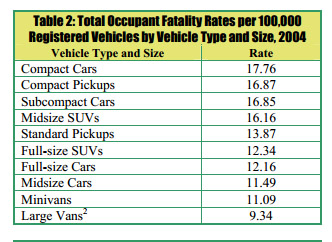
This is extremely easy to prove:  just look at the actual crash statistics, compiled by vehicle weight:

Inline image 1

06 July 2013

If I Were Elected King of the Country

My new friend asked me a few weeks ago, "what would you change about the world, if you had the power to?"
She said she tried to ask all new people she met that question.
She said it was surprising how many people didn't have an answer because they had never thought about it.
I couldn't answer, but for a very different reason.
I just couldn't sum up, couldn't choose from the list what to say first.
I've been thinking about it ever since then, and I still can't find any way to tie all the various things together, so, instead of going into the detail about how and why for each one, I think I'll just list as many as I can think of.
(and if anyone wants elaboration on any in particular, ask me as a comment, and maybe I'll make that one its own post)

These are in no particular order:

29 June 2013

Your Actions are (part of) Causing that Traffic Jam You're Stuck in*

*In the morning and evening of most large American cities (especially those surrounded by plenty of suburb), when everyone is driving their cars to their 9-5 jobs, there are simply too many vehicles on the highway for the lane capacity.  You get on the highway at the nearest entrance, and proceed to average 15mph the entire distance from your suburban home to the downtown city center where you work, frequently coming to a complete stop, never going more than 25mph at the most.

In that situation, traffic is going to go slow, no matter what.
That isn't the type of traffic jam I'm talking about.
There is also another type of traffic back up.  The kind that happens in moderate traffic.  Everyone slows down, sometimes even to a complete stop, and then a few hundred feet later, you are moving again at 50, 60, 70mph, as if nothing happened.
Sometimes this happens because there is the aftermath of a crash in the shoulder, or even across the divider on the opposite shoulder of the oncoming lane, and all the drivers feel it is very important for them to take a good look at it, because humans are just like that.  Other times its because someone is getting a traffic ticket, and, even though the cop is clearly busy at the moment, people imagine they are more likely to be caught speeding if the can see a police car.
But most often, these slow downs happen for no apparent reason at all.  You get to the front of it, and cars are accelerating just as suddenly as they slowed down.
Sometimes traffic pulses like this, fast - slow - fast - slow - fast - slow for miles.  In some places, not quite as dense as in the first example above, the daily commute does this pulse jam every single day.

24 October 2012

Aerocaps for pick-up trucks

Aerocaps for pick-up trucks

by Bakari Kafele on October 24, 2012
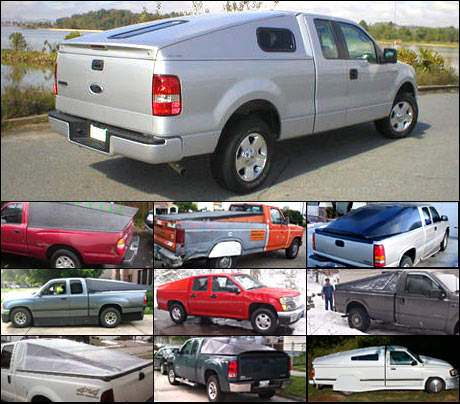
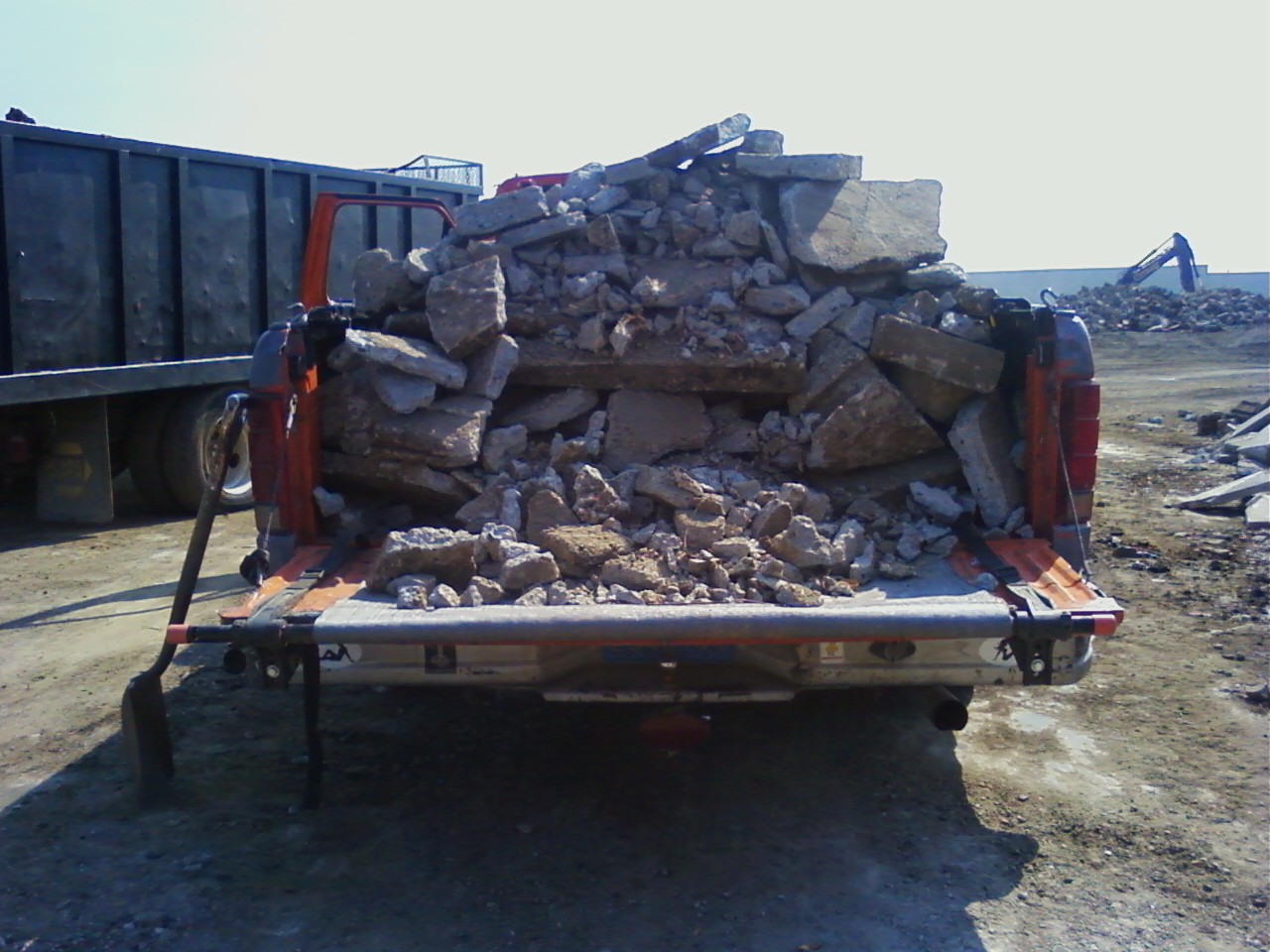
Aerolid When people think about fuel economy, they usually think about small cars, perhaps a mid-size hybrid.  If they think about trucks, its usually to contrast them with a more efficient vehicle (and perhaps chastise truck owners for their wasteful choice).
But while cars are great if you need to get yourself and maybe a few other people from one place to another, they don’t excel in moving large amounts of stuff, and can’t tow very much.
If you regularly need to move lots of big, bulky, or heavy stuff, or tow something large and heavy, but rarely need to move more than a couple people, a truck makes a lot of sense.
Of course there is a reason that trucks are seen as inefficient: they are.  They are heavy, overpowered (although cars are even more so these days), and not at all aerodynamic.
Then again, because trucks get such low mileage to begin with, improvements in their mileage have a relatively bigger impact.  For example, an increase of 15mpg for a 45mpg car is a 33% increase and will save 55 gallons of fuel over 10,000 miles.  Not bad, but that same 15mpg improvement to a 15mpg truck is a 100% increase, saving 333 gallons over the same distance.
So what is a mpg-conscious person who needs to move a lot of stuff to do?

13 July 2012

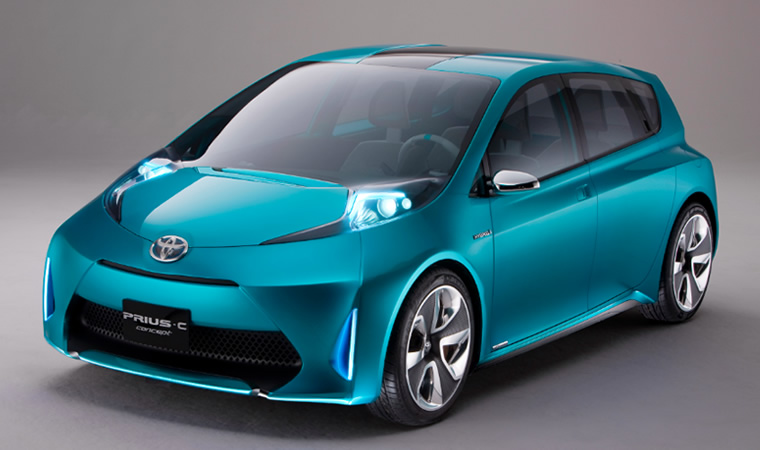
Prius C: A sub-compact hybrid, at a non-hybrid price.

Prius C: A sub-compact hybrid, at a non-hybrid price.

by Bakari Kafele on July 13, 2012

The newest Prius, available for only 2 months now in the US, is a compact fuel-efficient hybrid.
One thing it is not, however, is a Prius.

09 July 2012

Adding an overdrive (BW T-19 to ZF-5 transmission swap)

(Just want tips for swapping a BW T-19 for a ZF S5? Skip to tips.  Not swapping a Ford truck transmission?  Skip to the end for the results.  Continue reading for all the gruesome details of my project.  Hopefully my trails and tribulations can at least provide you some entertainment.)


If you’ve never driven a vehicle more than a couple decades old, you probably take overdrive for granted.  You may not even have a clear idea what that term means.That 5th or 6thgear, with a ratio smaller than 1.0 (meaning the driveshaft is turning faster than the engine) lowers the engine RPM speed on the highway, and can make a huge difference in the fuel used to go the same distance at the same speed.Gears on a car are just like gears on a bicycle; imagine trying to ride a bike with only a small chainring and big cog, and having to spin your legs like crazy to get anywhere at a decent speed.  Lower RPMs means less internal friction, less internal reciprocal motion, and therefore less wasted energy.
If, like me, you don’t care to spend the money for a new – or even remotely new-ish – vehicle, you may have noticed that overdrive was once upon a time not always standard equipment, or even available as an option.

The Ford F-Series of trucks has been one of the most popular vehicles world-wide for decades, and though much has changed over the years, many of the internal design factors stayed the same from one generation to the next.  They were rather reliable, so a good many older ones are still on the road.  Those two factors mean that there is much interchangeability of parts among different generations, and those parts are easy to find.
The 7th generation F-series (1980-1986) had a couple of manual transmission options, all of them 4 speed. My own 1983 diesel F-250 ¾ ton truck came with a Borg-Warner T-19, in which the 1st gear was an extra-extra low granny gear (6.32) which is normally not used.  For all practical purposes it is a 3-speed.  No overdrive gear.  In fact, even 4th gear isn’t quite direct drive, at a 1.1 drive ratio.
This means shifting into top gear at 25mph, and 2400 RPMs at 55mph.
2400RPMs means each piston is going up and down 40 times every single second, which means the mass of the piston head has to stop, change direction, move a little, stop, change direction again, 80 times every second (once up, once down, for a full rotation).  This is bad enough is a small engine with light parts and a couple cylinders (like a motorcycle) but in a heavy V8 diesel engine, a lot of inertia is going to waste.
Not a terribly big deal in 1983, when the national speed limit was still 55, but post-embargo gas prices had dropped again; the lack of stock overdrive leaves a lot of potential for increasing highway fuel mileage.
The addition of an overdrive gear reduces engine speed from 40 cycles per second down to only 28, a 30% reduction.

14 May 2012

Infinity Miles Per Gallon

Infinity Miles Per Gallon

by Bakari Kafele on May 14, 2012


Question:
What can you do to absolutely minimize your fuel use?


02 May 2012

Jacob Aziza / Bakari Kafele; Ecomodder / Hypermiler

Jacob Aziza / Bakari Kafele; Ecomodder / Hypermiler

by Bakari Kafele on May 2, 2012
Good morning fellow ecomodders, hypermilers, and efficiency enthusiasts of all kinds.
The EcoModder blog has been inactive for over a year (save Tim’s two most recent updates), and I have been asked to help pick it up again.
So, since I also have not been active on this site for nearly a year, to start I thought I would re-introduce my self:
My name is Bakari Kafele.  My internet screen name (or at least one of them) is Jacob Aziza.
You may remember me from such internet sites as the EcoModder Forum and Instructables.com
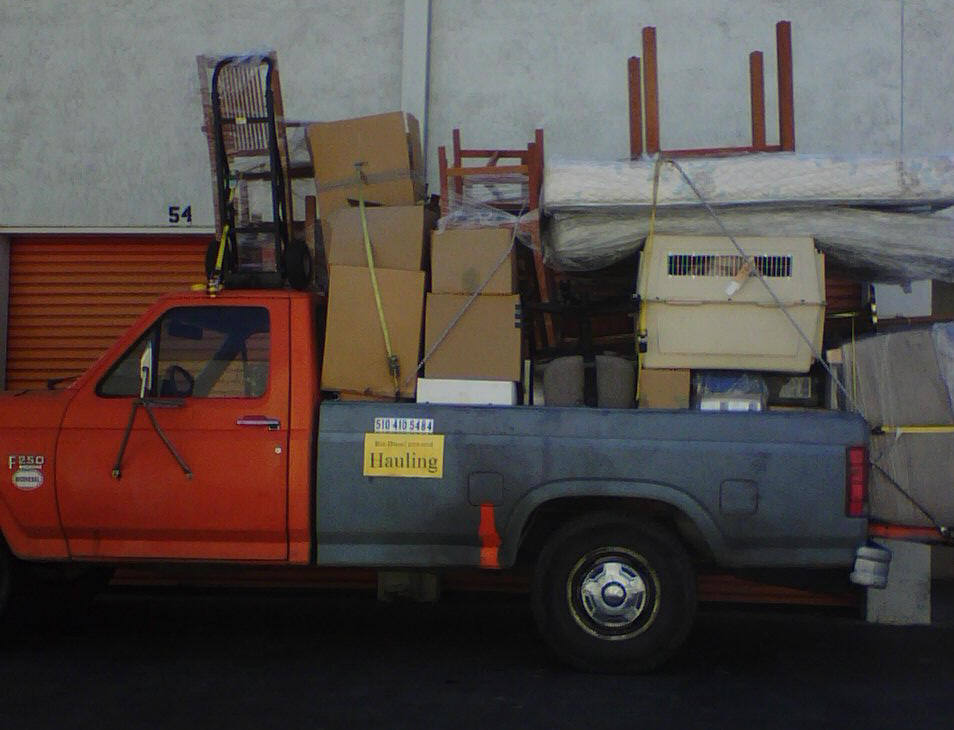
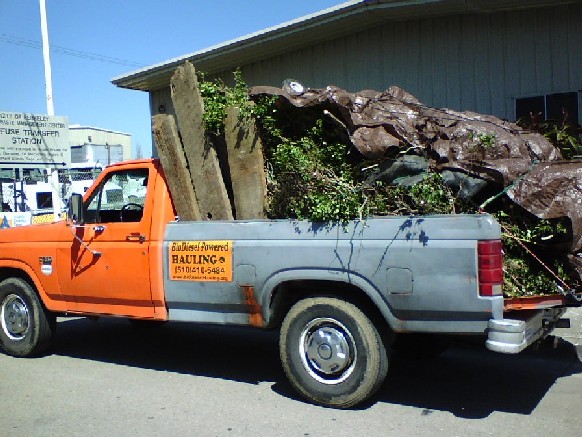
I have an old (1983) full-size truck with a 6.9L diesel V8 that I use for deliveries and hauling and occasionally towing.  It would be a monstrosity for a commuter vehicle, but it’s about the smallest thing that could serve my work needs – most people hauling large or heavy loads (see below) would use a box truck, a flat bed, or maybe even a dump truck.


At the very least an F-350 or equivalent1-ton pick-up.
So, depending on how you look at it, getting 15 miles per gallon, (as I was five years ago), could be considered decent, given the type of work being asked of this old truck – 15 mpg being what I measured I was getting, which coincided more or less with what most people report getting in the same make model and year truck.
Then, in 2008, I read an article about Wayne Gerdes…

18 March 2012

"Mad Max" hypermiler questions and comments answered


As I am very sure that anyone who has found this blog is already aware, me and my work truck were recently featured on  TreeHugger, Huffington Post, HighT3CH, and Faircompanies.com, among others, for my new video (shot, edited, and posted to Youtube by Faircompanies' Kirsten Dirksen)

It is 14 minutes long, which is long by modern internet video standards, but still was only enough time to provide a little snapshot into the entire concept.
I've been crawling the web for the various re-posts and the comments on them.  Not surprisingly, given how unorthodox everything I'm doing is and how unfamiliar the general public is with the idea of hypermiling, there are a lot of questions and criticisms and misconceptions.
First, I'm not in or from LA.  I live in the San Francisco Bay Area.

Also, the grill block is not made of concrete!! :P
That error is just bizarre.  I wrote to treehugger's editor about it, but I haven't heard back yet...
[update: he wrote back, and fixed it]


Some of the more common questions and comments I have noticed follow:

04 January 2010

Check Your Mirrors


  • Jan 4, 2010

Check Your Mirrors

Occasionally I end up driving other people's cars.

Invariably, I have to adjust the mirrors.
I often question why they were set the way they were, and the answer is usually some variant of "I like it that way".
I realized that probably a whole lot of people probably see it that way.

Setting mirrors is not a matter of personal preference.
There is an absolute right and wrong way to do it.

Before you accuse me of being a mirror nazi, consider that car accidents kill more Americans under 50 than disease and murder combined; 100 every single day.

As someone who rides a bike, skates, rides a motorcycle,  has driven large commercial trucks with large commercial size blindspots, and nearly been run over inside other peoples blindspots, I say again, with emphasis, setting the mirrors on your car is not a subjective exercise.
Doing it wrong can literally mean the difference between life and death.

05 August 2009

Slow down. My philosophy for life also applies to the road.

Slow down. My philosophy for life also applies to the road.

I have been requested to post something positive.
In light of that request, I am putting a positive spin on what I was going to write anyway.

While I am generally good at pointing out problems and at complaining, I don't generally offer much by way of solutions.
This time I have a very concrete solution, which is within easy reach of ordinary Americans, with no risk, no cost, and a negligible amount of inconvenience.
It is something you, the reader, can do.


But first, a short history lesson:

02 June 2009

Mission Accomplished


  • Jun 2, 2009

Mission Accomplished

Back when I began I set a totally baseless "goal" of 25mpg.

That would make my (CAFE exempt) 2.5-ton full-size commercial truck more fuel efficient than the average passenger car on the road today.

The changes since I last posted:

-Replaced mechanical vacuum pump with an electric one (from the wrecking yard - they don't have a list of cars, and most of the insignias have been pulled off, so I had to check each one.  I found it in the very last row, after having gone through probably 200 or so)  This allowed me to remove the alternator belt altogether.


-Replaced belt driven radiator cooling fan with an electric one.  It has a thermostat, so it only goes on when its actually needed.  It also weighs about 1/10th as much, so it doesn't require as much energy to turn.


-Added an underbelly pan from the front bumper to around 1/2 back to smooth out airflow beneath the vehicle, along with little spoilers in front of the front tires (they were big spoilers at first, but they rubbed the wheels at highway speeds and wore away) 


-Removed the windshield wipers to make it a little more aerodynamic.  They, along with the alternator belt, live inside the cab now just in case I need them unexpectedly.  They de/reattach with no tools in just a couple seconds.

-Replaced the grill tape with a sheet of coroplast (same stuff the belly pan is made from) so it can be removed easily in hot weather. The engine runs better warm in general, but the new fan isn't quite as powerful, and between that, the grill blocking, and driving (faster than usual, 65mph) in the hills during the brief hot weather we had last week, it did overheat once, so I thought it better to make something that could quickly and easily be removed and replaced later.


-Removed power steering pump and replaced steering gear with a manual steering gear.


I've also added a solar panel, changed my aux driving lights to 5w LEDs and moved them to inside the grill.

The average brand new passenger vehicle (inc. cars and light trucks) gets 26.7mpg.

On my last fill up my 1983 commercial truck got 26.85mpg

11 May 2009

The Contest


  • May 11, 2009

The Contest

[note: this is a repost from long ago.  You cannot vote.  But you can still see it]


I would much appreciate it if you voted for my instructable.

I don't so much want the prize, but I would love the exposure.

Unfortunately you have to sign up, but fortunately it's free, and doesn't take very long.

Thanks in advance.

12 April 2009

Bringing it to the masses


  • Apr 12, 2009

Bringing it to the masses


My friend/co-worker, upon hearing about my truck project, encouraged me (repeatedly) to do a write up for the do-it-yourself website Instructables.com
As it happened, I was working on consolidating my blog posts on the topic for the hypermiling websites from which I had originally gotten most of the ideas I've been implementing.
So I followed the link he sent, signed up, and reformatted the posts to be appropriate for the popular how-to site.

The site was new to me, so it took basically all day figuring out the features and making changes to the content and pictures and tweaking various things. Comments started coming in, and I responded to the comments, and then a site administrator must have seen it and liked it because before the first day was over I was promoted to a "featured" item, which meant my post was put on the site's homepage.

And the views took off. By day two there had been over 4000 views, and it was moved to the "popular" section of the homepage.
Right now (3 and half days since I published) its up to 6415 views and over 50 comments.
One of which was: "I think I might play the aero game on my car now!"

That's the best compliment I could get. If I encourage just one person to drive a little slower, or even do some mods, writing all this up will have all been worth the effort.

It's one thing writing on my own blog, or on a hypermiling website, but introducing these ideas to the general population, that is gratifying.
http://www.instructables.com/id/Vehicle-efficiency-upgrades/

08 April 2009

Upgrade update

  • Apr 8, 2009

Upgrade update


If I really wanted to accurately determine how much difference any particular change made, I would make upgrades immediately after filling the tank, and then do only change at a time, going the entire tank and calculating mileage before doing another.
I don't have that kind of patience.

When I wrote last about it (the post with the pictures) I had begun those mods several days into a new tank of gas.

I looked up what was typical for the same model and year of truck online (there are no EPA estimates for it) and found people reporting anywhere from 10mpg to 18mpg.
Myself, loading it to it's max for work, but being a generally gentle driver, before I had ever heard of hypermileing I was getting between 15 and 17mpg.

By changing just my driving habits, driving slow, accelerating gently, coasting when coming to a stop, I raised it to 19.7mpg.

02 April 2009

trailer park vehicles


  • Apr 2, 2009

trailer park vehicles

I'm not the only one here in the trailer park putting a lot of work into an old dented vehicle that looks kinda like a piece of crap by most people's standards.

Many a night I pass by the neighbors place as they weld and hammer out the damage from the last race.

They spend weeks, months, turning this thing into something capable of moving under its own power.
And then they take it out and smash it up all over again.

Best of all, it is designated as the official High Street Trailer Park car.  We have demolition derby representation.  Its kinda like our own sports team.


21 March 2009

My other project (trying to make my big commercial truck as fuel efficient as a car)

  • Mar 21, 2009

My other project (trying to make my big commercial truck as fuel efficient as a car)

After being pulled over for driving too slow, I looked up a couple hypermileing websites in order to post the story among people who might find it entertaining, and possibly offer some advice as to how to avoid/deal with the situation should it happen again. While there I found all sorts of ideas and suggestions I hadn't thought of and decided to attempt to make the truck itself more efficient to compliment my new driving style. This number is totally arbitrary and baseless, but my "goal" is 25mpg.
The average fuel economy of all US passenger cars on the road (not trucks, SUVs, or vans) is only 22.
The overall mileage for all US passenger vehicles on the road is only 17 - less than I am getting currently.
(And that's "passenger" vehicles. Technically my 5500lb diesel is classified as a commercial vehicle, even if I didn't use it for work)

Of course this whole exercise is more just for the principal than it is to save money, considering how much I spent on the project so far.

Completed so far:

08 January 2009

My mileage results are in


  • Jan 8, 2009

My mileage results are in


I've been driving more conscientiously ever since I read the article on hypermiling, which I posted about in November of last year ("Some more stuff other people wrote")

I didn't quite take it to the extent of the guy profiled in the original article (he drives on the edge of the road to avoid the extra friction from the tire grooves, and knows exactly how far from home to coast to a stop exactly in his driveway without touching the brakes) but I did slow down, accelerate gently, shut the engine at long stop lights and coast down hills.  There is even a 2.3 mile stretch of highway 13 (which I take on the way back from Bike Patrols) where I can put it in neutral, shut the engine, coast down one hill, up the next, back down, off the off ramp, around a tight curve, through a yield sign, back on to the freeway entrance for 580, off at the next exit, and down to MacArthur before starting it back up again.


18 November 2008

Some more stuff other people wrote


  • Nov 18, 2008

Some more stuff other people wrote

I'll write something of my own soon, promise.
Until then, here are two articles, with some steps you can take in your own daily personal life which will ultimately benefit everyone (not to mention your own wallet and health!).

_____________________________________

Because every time you buy gas, the terrorists win:
(Original artwork by Bakari Kafele)


13 August 2008

Part 2


  • Aug 13, 2008

Part 2

Something feels off about my last post.
Too negative.
I forgot the important part about how being "green" isn't really a sacrifice at all.

Because, really, a great many things that we take for granted today, many of the conveniences and luxuries, don't really add much to life - in fact, some take away from it.

Say, for example, you trade your car for a bike and your steak for a salad.
Right off the top you are saving money. In the case of the car, thousands upon thousands of dollars.
Then, after a few weeks, you are getting healthier, stronger, losing weight, feeling better about yourself, feeling better about getting up and starting each new day.
The same goes of you just take a partial step, say riding the bike to work (or to the train station, whatever) once a week, and reducing animal product intake by half.
You still find yourself with more energy, a more positive outlook on the world. After a few months, maybe a year, chances are you are up to 3 days a week, and meat only for special occasions.

Meanwhile you have this big ole stack of bills piling up in your bank account - oh, and as a side benefit, you are doing a huge service for the environment ("the environment" being short-hand for "the future of all life on the planet, including ourselves")

Its like smoking. For a smoker, there really isn't any reward to each cigarette, other than the cessation of the withdrawal symptoms. The reward to giving it up is significantly improved health, both in terms of being able to catch the bus that's just pulling away, and in terms of a long life. Plus, all the money you save by not buying the cigarettes (and the health care costs some day - because yall know we aren't going to get a nationalized health plan anytime soon).
Its just habit (and chemical addiction) that keeps them going back for more.

Our cars and diet and electricity use and all the rest are basically like cigarettes. They don't make us happier in life, but we have a lot of trouble giving them up.
(The good news is, no physical addiction!)

Other things that are good for the earth, which in the long run are good for our pocketbooks, our health, and/or our happiness, include buying the absolute smallest car you can find, buying less stuff (we all know stuff doesn't really make us happier), living close to work (or better yet, telecommuting), eating organic (more nutrients, less toxic chemicals), saving energy (this should go without saying.) It does take more time to put the clothes on the line. But not only do you save money, that is time spent outdoors in the sun, instead of in some laundrymat or the basement.

Then, with all the surplus in good deeds, spend some of that on the things that make life better, (but maybe aren't the best things ecologically)
If you spent all year saving electricity, go ahead and put up that elaborate xmas light display.
After buying everything on Craigslist.org or from thrift stores, go ahead and buy a brand new high quality food processor.
After biking to work every day, take the car up to the mountains for vacation.
And don't feel bad about it!

Enjoy life. Doing good should not be a sacrifice.